
In the world of betting, whether it involves sports, casino games, or financial markets, success is rarely a matter of luck alone. A critical factor that separates consistent bettors from occasional participants is the diligent tracking and analysis of betting records. Keeping comprehensive records allows bettors to identify patterns, evaluate strategies, and make data-driven decisions that improve long-term outcomes. While casual gamblers may rely on instinct or intuition, those who maintain meticulous records gain a systematic advantage that compounds over time.
Recording bets begins with documenting the fundamental details of each wager: the date, the type of bet, the amount staked, the odds offered, and the outcome. At first glance, this may appear tedious, especially when results are negative. However, the value of such detailed documentation becomes apparent when patterns begin to emerge. By consistently reviewing this information, bettors can determine which strategies yield positive expected value and which are prone to repeated losses. Over time, this insight enables the refinement of approaches, eliminating habits that drain resources and reinforcing those that contribute to steady growth.
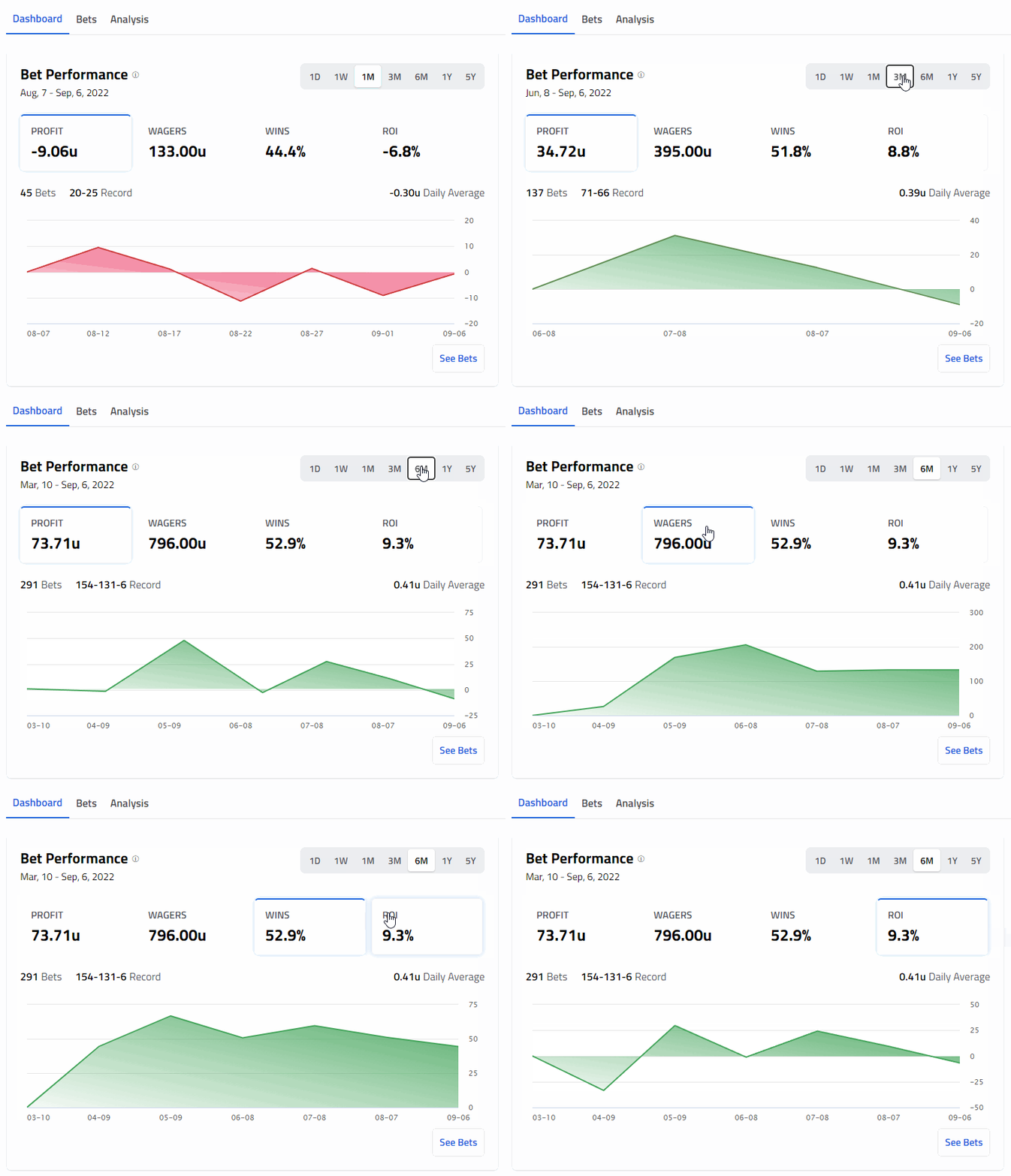
Beyond simply tracking wins and losses, analyzing betting records provides a quantitative measure of performance. Metrics such as return on investment (ROI), win rate, average odds, and variance become accessible when records are well-maintained. For instance, a bettor who consistently stakes on small, low-risk wagers may notice a moderate win rate but a high ROI due to disciplined bankroll management. Conversely, someone placing high-risk bets sporadically may experience dramatic wins and losses, but a record review can reveal an overall negative trend that might otherwise go unnoticed. Understanding these metrics allows bettors to adjust stake sizes, diversify bet types, and manage risk more effectively.
Another crucial benefit of maintaining betting records is the ability to identify psychological tendencies. Many bettors fall prey to emotional decision-making, chasing losses or overestimating confidence after a winning streak. By examining past wagers, individuals can see where emotions influenced choices and make conscious adjustments. For example, a bettor may recognize that they frequently place larger stakes after consecutive losses, resulting in disproportionate risk exposure. Recognizing such patterns helps cultivate discipline, ensuring that decisions are based on analysis rather than impulse. This psychological self-awareness is often as valuable as the statistical data recorded.
Betting records also facilitate strategy testing and adaptation. Experienced bettors often experiment with various approaches, such as value betting, arbitrage, or specialized handicapping methods. By maintaining a detailed history of these experiments, they can assess which strategies produce consistent profits under different conditions. This evidence-based approach contrasts sharply with trial-and-error methods without documentation, where success may appear random and hard to replicate. Through careful record-keeping, bettors can fine-tune tactics, discard underperforming strategies, and scale effective methods, leading to long-term growth.
Bankroll management, a cornerstone of sustainable betting, is directly enhanced by thorough records. Understanding past wins and losses allows for precise allocation of funds, ensuring that a losing streak does not erode the entire bankroll. By analyzing how much is typically lost or won over a given period, bettors can establish appropriate staking plans and set limits that minimize the risk of ruin. Records reveal not only financial outcomes but also volatility patterns, guiding decisions on how to balance high-risk and low-risk bets in alignment with long-term goals.
Moreover, maintaining a comprehensive record provides accountability and transparency. In both personal and professional contexts, being able to review a detailed history of bets fosters responsible behavior. It reduces impulsive actions and encourages reflection on decisions. For professional bettors or those seeking to engage in syndicated betting, records become essential for reporting performance to stakeholders or partners. This level of accountability not only builds credibility but also reinforces the discipline necessary for sustainable success.
Betting records also serve as a repository of knowledge. Over time, they accumulate insights into teams, players, or market behaviors. For instance, a sports bettor may discover that certain teams consistently underperform in specific conditions, or that certain odds formats yield higher long-term value. By referencing historical records, bettors can make more informed predictions, leveraging past data to anticipate outcomes more accurately. This accumulated experience transforms sporadic, guess-based betting into a structured, analytical practice.
In addition, technology has amplified the benefits of maintaining betting records. Software tools and spreadsheets can automatically calculate performance metrics, visualize trends, and even generate predictive models. These tools allow bettors to process large volumes of data quickly, uncover subtle patterns, and simulate scenarios that inform future decisions. This integration of data management with strategy development further enhances the ability to achieve consistent, long-term results.
In conclusion, maintaining detailed betting records is far more than a clerical task; it is a strategic advantage that empowers bettors to analyze, adapt, and optimize their approach. Through careful documentation, individuals gain insight into performance metrics, identify behavioral patterns, test strategies, and manage risk effectively. These records serve as both a mirror and a guide, reflecting past behaviors while illuminating paths for improvement. In an arena where variance and uncertainty are inherent, the disciplined practice of recording and analyzing every wager transforms betting from an unpredictable gamble into a systematic endeavor with a higher probability of long-term success.







Leave a Reply